You have a business idea, a clear plan, and the confidence to begin. Before you start operations, there is one important step you should not skip: incorporating your company. Choosing the right type of business entity and completing the process correctly can save you from legal and money problems later.
Incorporating a company involves legal steps, documents, and compliance rules. When you understand these steps in advance, you save time, avoid delays, and reduce the risk of future challenges.
When you incorporate a company, it becomes a separate legal entity, different from its owners. The company can sign agreements, own property, open a bank account, and carry out business in its own name.
Before you incorporate, you need to decide which type of business suits you best.
A Private Limited Company is a good choice if you plan to grow your business or bring in investors. A One Person Company (OPC) allows a single eligible person to run a company without partners. You can also choose a Limited Liability Partnership (LLP), a regular partnership, or a sole proprietorship. Each has its own rules on ownership, personal responsibility, tax, and compliance.
The right choice depends on the work you will do, the number of owners, how much you plan to invest, and where you want your business to be in the future.
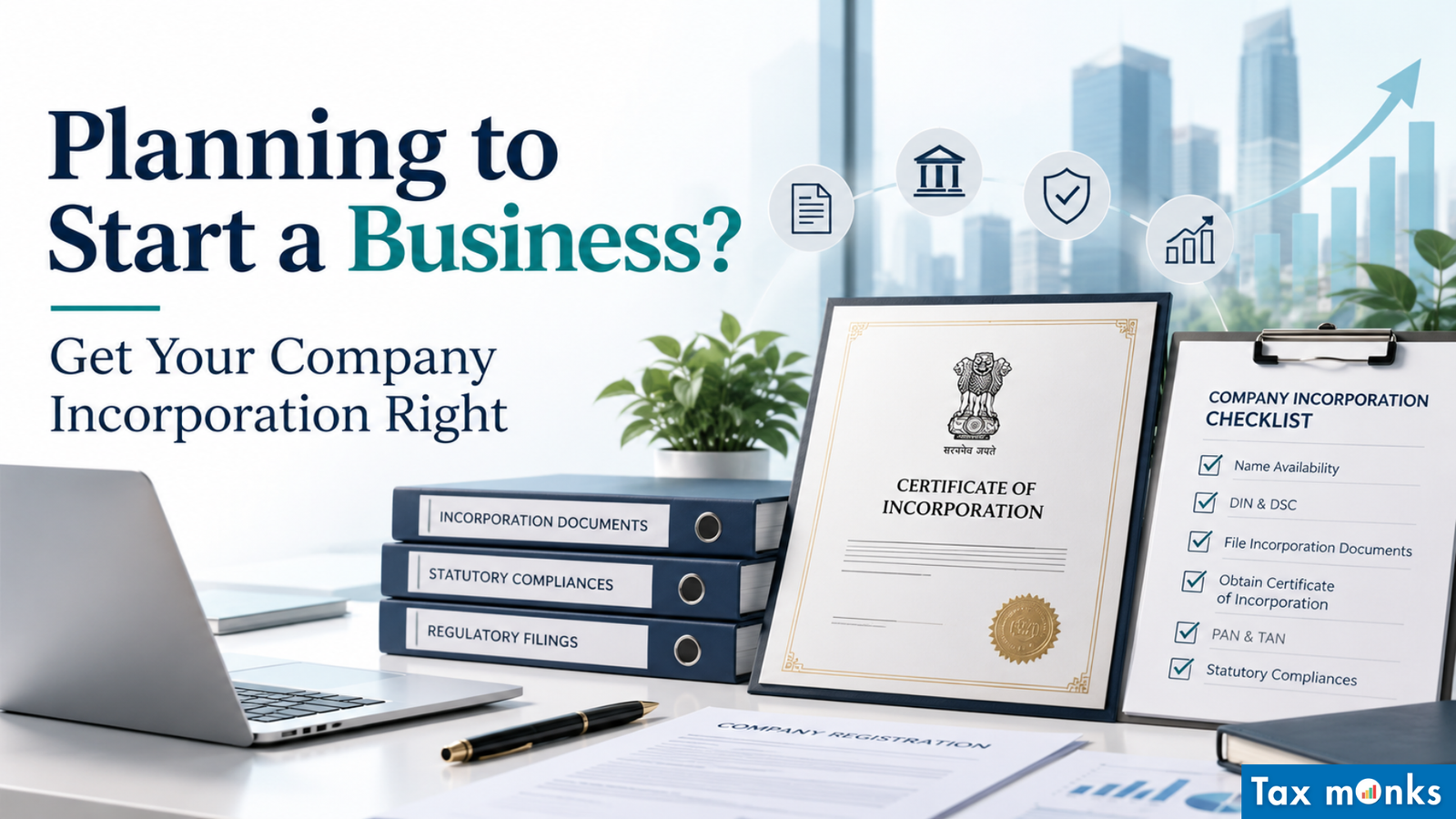
Company incorporation in India is handled by the Ministry of Corporate Affairs (MCA). The usual steps are choosing a company name, getting Digital Signature Certificates (DSC) for the directors, preparing the documents, and submitting the application online through the SPICe+ form.
Two key documents are required. The Memorandum of Association (MoA) states the purpose of your company, and the Articles of Association (AoA) sets out how the company will be managed.
Once the application is approved, the Registrar of Companies issues the Certificate of Incorporation. PAN and TAN for the company are also allotted as part of this process. Depending on your business activities, you may need some additional registrations or licences.
Wrong or missing documents, company names that are not accepted, and incomplete applications are the most common reasons for delay. Choosing the wrong business structure can also cause problems when your business starts to grow.
Another frequent mistake is ignoring compliance after incorporation. Every company must maintain proper accounts, file its statutory returns on time, and pay its taxes. When owners understand these duties early, they can avoid penalties and unnecessary expenses.
Incorporation is only the beginning. After your company is formed, you need to keep accurate financial records, manage your taxes, and meet reporting requirements on time.
A good accounting system helps you track your income, control your expenses, and prepare reliable financial reports. Guidance from a professional can also help you understand your responsibilities clearly and stay on the right track.
Starting your business with the right structure and proper incorporation helps you avoid problems in the future. Correct documents and timely compliance keep your business running smoothly.
With careful planning, you can complete the incorporation process with confidence and focus on growing your business.
For enquiries, mail us at: info.taxmonks@gmail.com / info@taxmonks.com
Visit: www.taxmonks.com
Call: +91 98957 42652